

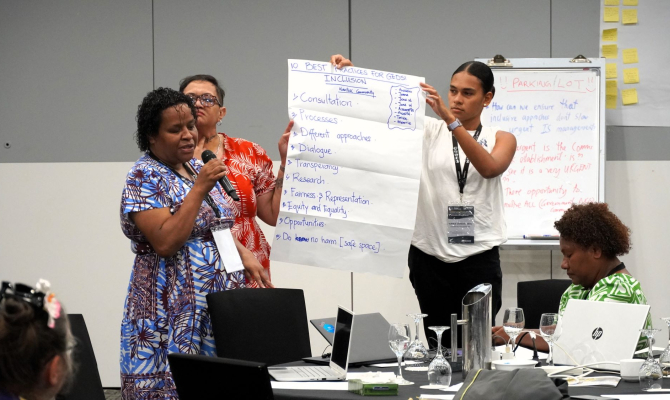
7 April 2026, Suva - Participants at the Empowering Pacific Narratives: Gender Equality, Disability and Social Inclusion (GEDSI) and Traditional Knowledge (TK) in Invasive Species Communications Capacity Building Symposium, held in Fiji in late March, collectively emphasised that Pacific voices and stories must be told with inclusivity, cultural grounding and authenticity.
They voiced that such approaches are essential not only for strengthening regional resilience but also for achieving meaningful biodiversity conservation outcomes, including the effective management of invasive species.
Organised by the Secretariat of the Pacific Regional Environment Programme (SPREP) led Pacific Regional Invasive Species Management Support Service (PRISMSS), the weeklong symposium brought together representatives from regional media organisations, NGOs, governments, community representatives and partners to explore how ethical and inclusive Pacific storytelling can transform invasive species management.
Participants explored how to embed gender empowerment, disability inclusion and cultural knowledge systems into their work, ensuring stories reflect both technical accuracy and community resonance.
The regional symposium was designed to build media capacity in applying a Pacific GEDSI and traditional knowledge lens to invasive species reporting, contribute to the development of a PRISMSS Pacific Communications Toolkit that integrates GEDSI and TK into invasive species management communications and create stronger pathways for collaboration between communities, media and government ministries in biodiversity conservation.
The weeklong interactive sessions provided a platform to address gaps by equipping participants with practical, Pacific‑specific guidance on respectful reporting, covering consent, inclusive language, accessibility, and recognition of knowledge holders.
Participants enhanced their knowledge through dialogue and hands‑on exercises, understanding how communications shape public understanding of GEDSI and TK, and how ethical reporting can strengthen resilience and conservation outcomes. By embedding GEDSI and TK into reporting, media professionals can help decolonize narratives, amplify diverse voices, and connect conservation action to lived experiences.
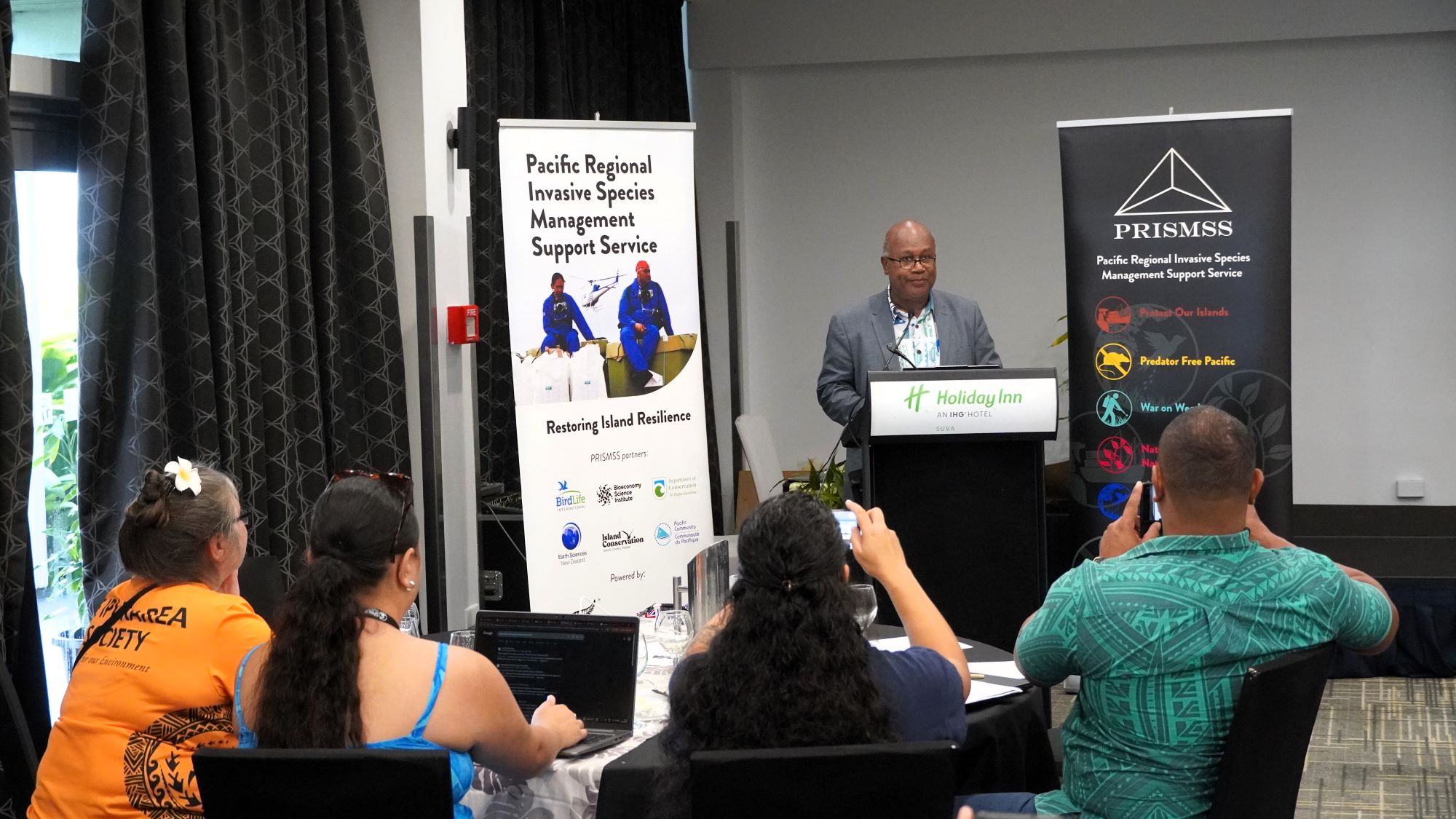
Mr Amenatave Yauvoli, Director, SPREP Biodiversity Conservation Programme (BCP) commented while delivering the opening remarks at the symposium that, “invasive species remain one of the most pressing threats to our islands and part of the triple planetary crisis that we face as they undermine food security, erode livelihoods and disrupt cultural heritage across the Pacific.”
“We have seen how invasive weeds choke agricultural lands, how rats and feral cats devastate seabird populations and how invasive plants alter the very structure of our forests.”
“These impacts are not abstract they affect the daily lives of our communities, from farmers and fishermen to elders safeguarding cultural traditions but with collaboration and innovation, SPREP through the PRISMSS programmes are finding ways to restore our Pacific islands resilience and safeguard the ecosystems that sustain us.”
“More than 100 islands have already been declared predator-free through our PRISMSS programme leading to the rapid recovery of seabird populations and healthier reef systems. These successes remind us that when we work together, the Pacific can lead the world in biodiversity restoration.”
Mr Yauvoli highlighted that the symposium was not only about technical skills but about community voices and values and by embedding GEDSI into communications, it ensured that women, youth, people with disabilities and marginalised groups are recognised not as beneficiaries, but as leaders in conservation.
“Respecting and reporting on traditional knowledge, we honor the wisdom of elders and custodians who have safeguarded our lands and seas for generations, their knowledge of seasonal cycles, resource management and cultural protocols is indispensable to modern conservation practice,” commented the SPREP BCP Director.
“By amplifying diverse voices, we connect conservation action to lived experiences, making biodiversity protection not just a scientific endeavor, but a human story of resilience, identity, and hope.”
Throughout the symposium, participants were encouraged to challenge existing narratives, learn from one another through sharing of lived experiences and co-create pathways for stronger, more inclusive conservation storytelling. The agenda combined interactive sessions, Talanoa discussions and hands-on group activities. Sessions ranged from embedding GEDSI in media practice to ethical reporting on TK with the overarching goal to ensure that Pacific biodiversity thrives when every voice is collectively heard.
Ms Liliani Polutele from the Tonga Broadcasting Commission while reflecting on attending the symposium shared, “invasive species management is strongest when rooted in inclusivity where GEDSI ensures equity, Traditional Knowledge ensures wisdom, and media ensures these voices are amplified.”
“In the Pacific, communications are more than storytelling, they are powerful tools to connect science with lived experiences, to honour cultural heritage and to inspire collective action against biodiversity threats.”
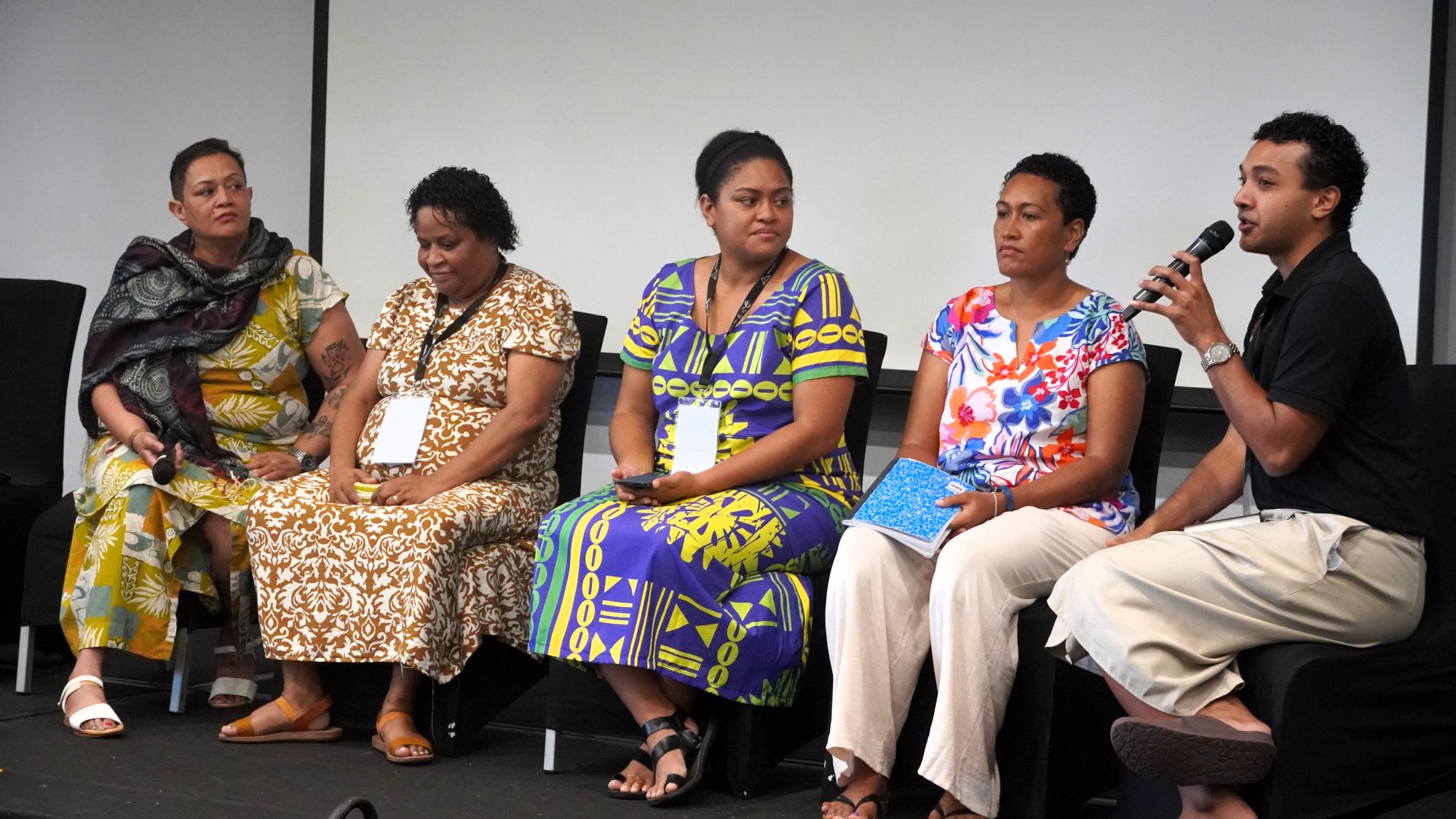
Ms Maria Nailevu, Programme Lead from the Fiji based Pacific Sexual and Gender Diverse Network shared that, "protecting biodiversity is not just about ecosystems it is about people and invasive species management must reflect the diversity of our Pacific peoples.”
“True resilience against invasive species comes when every identity is respected as invasive species threaten our biodiversity, but exclusion threatens our unity. GEDSI and Traditional Knowledge ensure that sexual and gender diverse communities are valued, respected, and central to invasive species management across the Pacific."
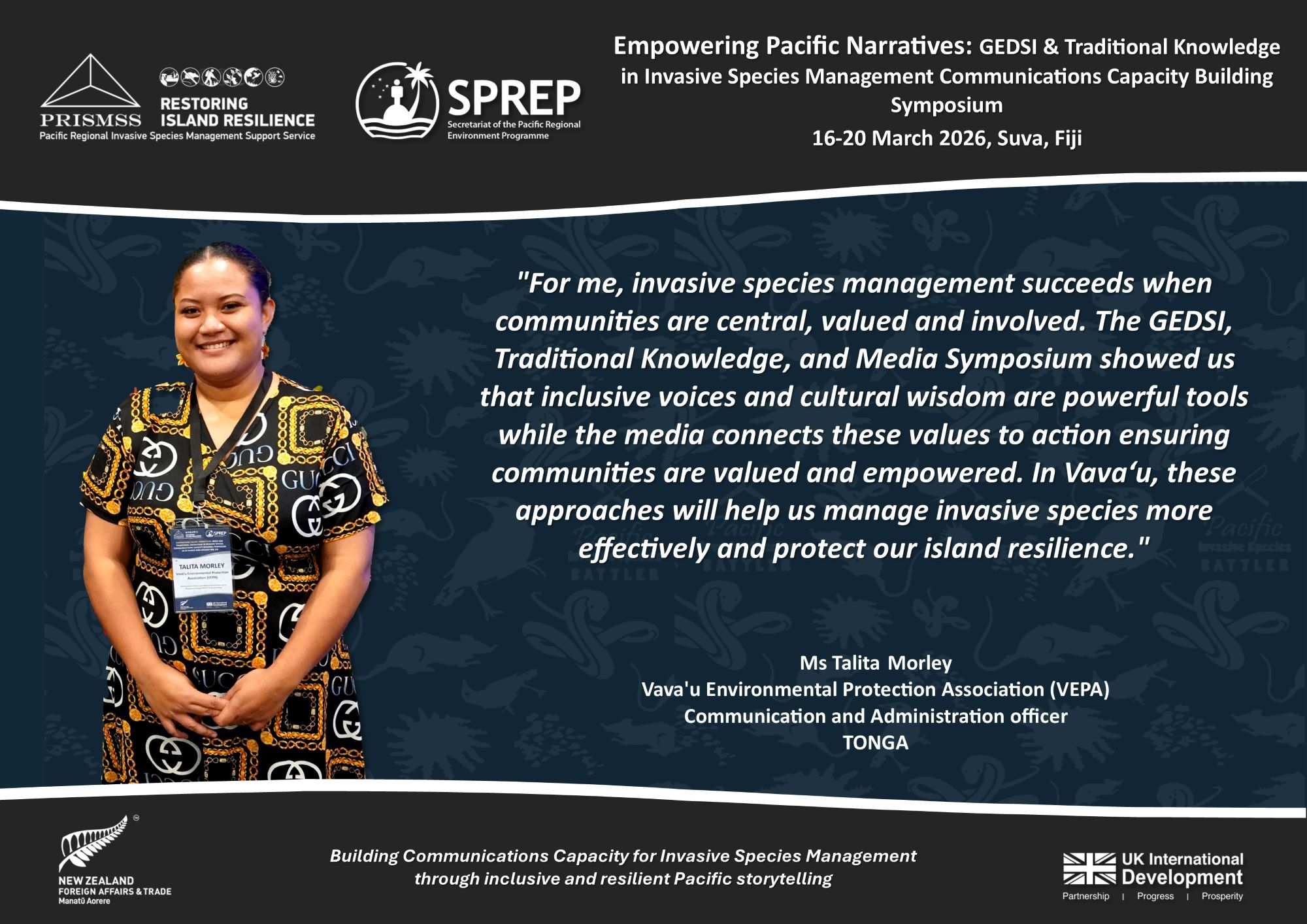
Ms Talita Morley from the Vava'u Environmental Protection Association (VEPA) based in Tonga reflected that, "for me, invasive species management succeeds when communities are central, valued and involved.”
“The GEDSI, traditional knowledge, and media symposium showed us that inclusive voices and cultural wisdom are powerful tools while the media connects these values to action ensuring communities are valued and empowered. In Vavaʻu, these approaches will help us manage invasive species more effectively and protect our island resilience."
Mr Sonu Dutt from the Fiji Ministry of Forestry shared that "resilient forests depend on inclusive action and in Fiji, protecting biodiversity means valuing people as much as ecosystems.”
“GEDSI and traditional knowledge place communities at the heart of invasive species management and the media ensures their stories shape stronger conservation outcomes but to ensure that our efforts are making an impact we need to work together with our communities and partners on the ground in an inclusive manner."
"Attending this workshop has reinforced how vital inclusivity and cultural wisdom are to invasive species management.
Turaga ni Koro mai Sawaieke (Community Leader) Gau, Mr Jone Wainiqolo shared that, “for us here in Gau, we try to make sure every member of our community is valued and involved and attending this workshop helped me find ways to better engage them.”
“Our conservation practices are guided by the traditional knowledge passed down from our forefathers, and we look to government and the media to help carry and amplify these voices.”
“When we bring these strengths together our culture, our partners and our stories, they give us the power to protect our land and ocean and build resilience for our people too.”
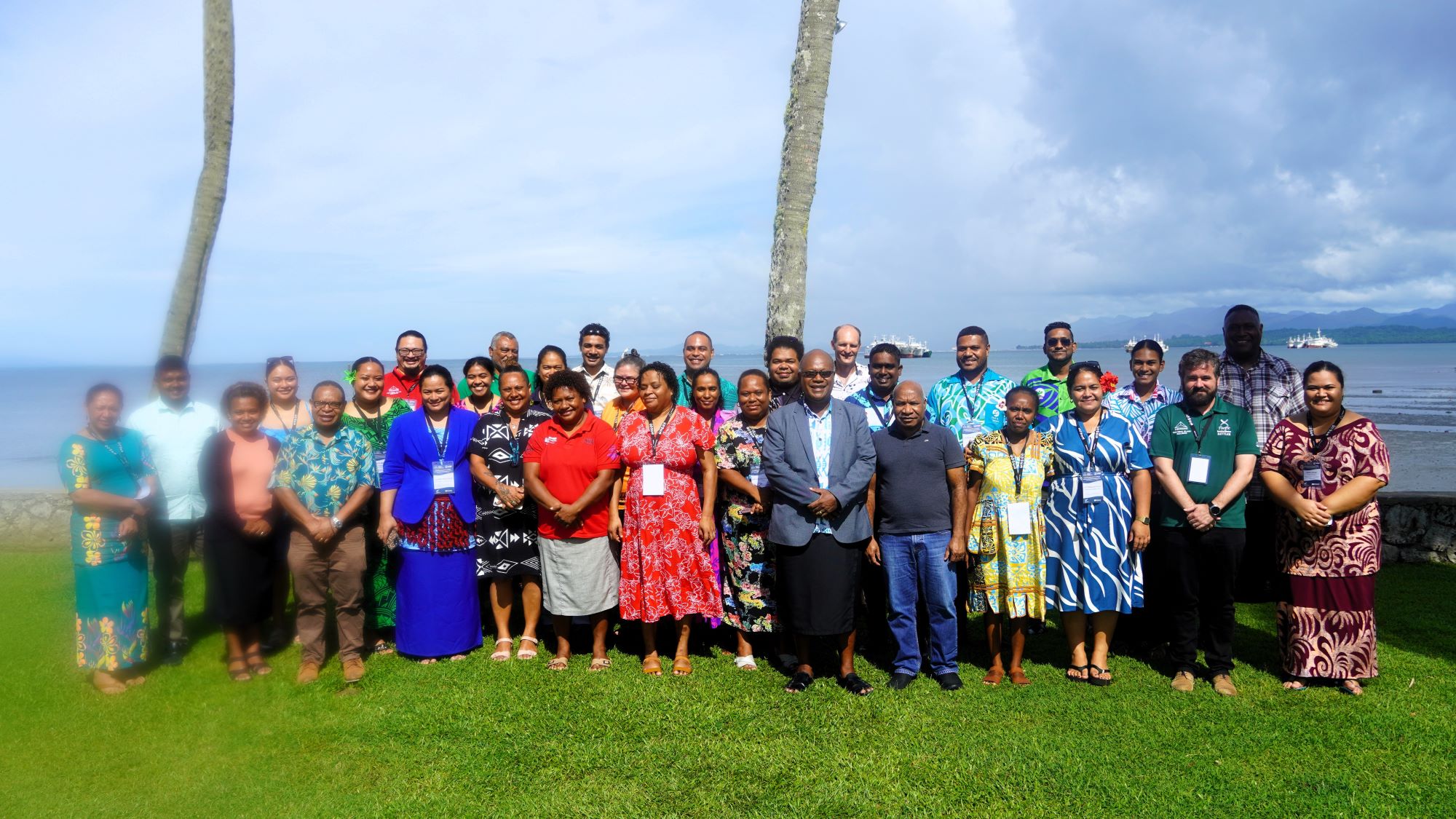
Invasive species remains one of the greatest threats to our biodiversity and managing them requires collaboration across partners, governments, communities, NGOs, the media and the private sector.
PRISMSS will continue to work with partners and strengthen regional resilience and improve the management of invasive species through similar workshops planned for the region.
--------------------------------------------------------------------------------------------------------------------------
About PRISMSS: The Pacific Regional Invasive Species Management Support Service (PRISMSS) is a service designed to facilitate the scaling up of operational management of invasive species in the Pacific. PRISMSS brings together experts to provide support within the Pacific region with a focus on protection of indigenous biodiversity and ecosystem function. As a service provider, PRISMSS provides a comprehensive suite of support services in a cohesive, effective, efficient, and accessible manner to Pacific Island countries and territories.
Restoring Island Resilience (RIR): The PRISMSS - Restoring Island Resilience (RIR) is a New Zealand-PRISMSS collaboration project that aims to improve Pacific Island Countries and territories livelihoods and resilience to climate change by reducing the impact of invasive species on natural and agricultural ecosystems through the six PRISMSS programmes.
PRISMSS Powered by: New Zealand Foreign Affairs & Trade, United Kingdom International Development, GEF, United Nations Environment Programme & SPREP.
PRISMSS Partners: Bioeconomy Science Institute, Birdlife International, Earth Sciences New Zealand, New Zealand Department of Conservation, Island Conservation, the Pacific Community and SPREP.
PRISMSS Programmes: Protect Our Islands (POI), Predator Free Pacific (PFP), War on Weeds (WOW), Natural Enemies Natural Solutions (NENS), Resilient Ecosystems Resilient Communities (RERC) and Protect Our Marine Areas (POMA).
For additional information please contact Mr Dominic Sadler, PRISMSS Manager on dominics@sprep.org or Mr Nitish Narayan, PRISMSS Communications & Liaison Officer on nitishn@sprep.org