

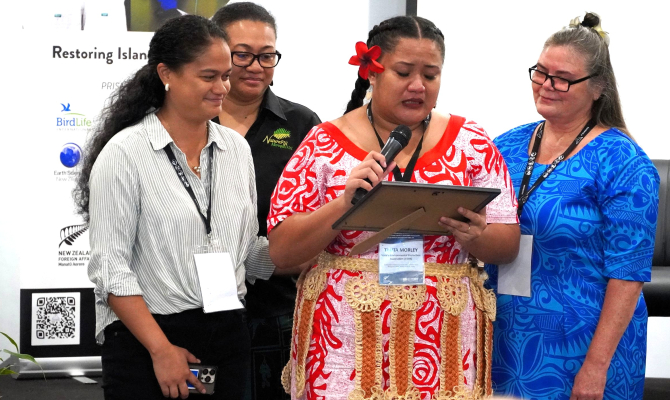
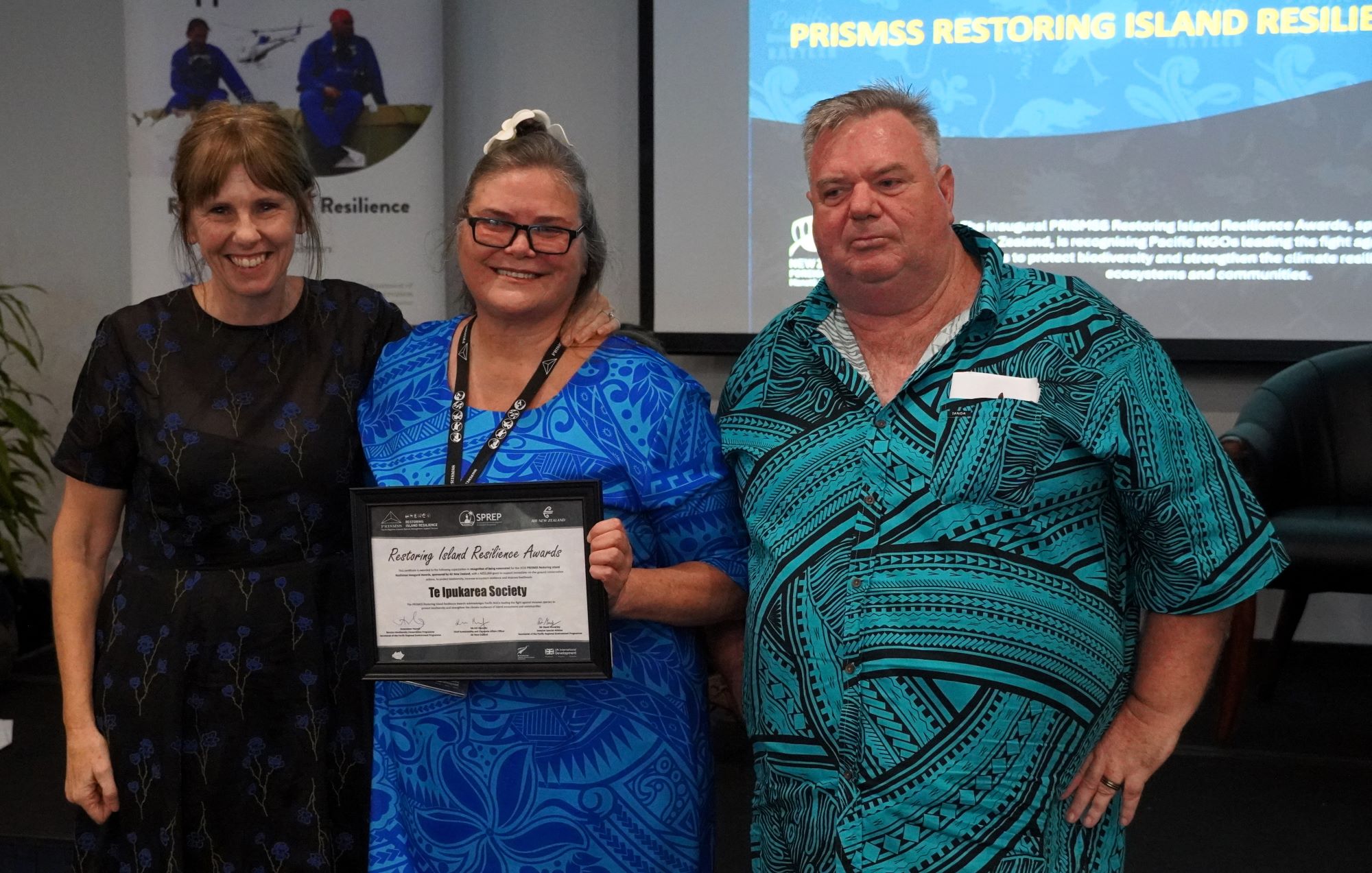
9 April 2026, Suva - The inaugural Pacific Regional Invasive Species Management Support Service (PRISMSS) Restoring Island Resilience Awards, sponsored by Air New Zealand, recognised six Pacific NGOs leading the fight against invasive species to protect biodiversity and strengthen climate resilience of island ecosystems and communities.
The special awards ceremony was held in Fiji in late March as part of the PRISMSS symposium Empowering Pacific Narratives: Gender Equality, Disability and Social Inclusion (GEDSI) and Traditional Knowledge (TK) in Invasive Species Communications Capacity Building.
As part of Air New Zealand’s sponsorship, all six nominated NGOs received NZ$5,000 grants to support immediate on-the-ground conservation actions, to protect biodiversity, increase ecosystem resilience, and improve livelihoods.
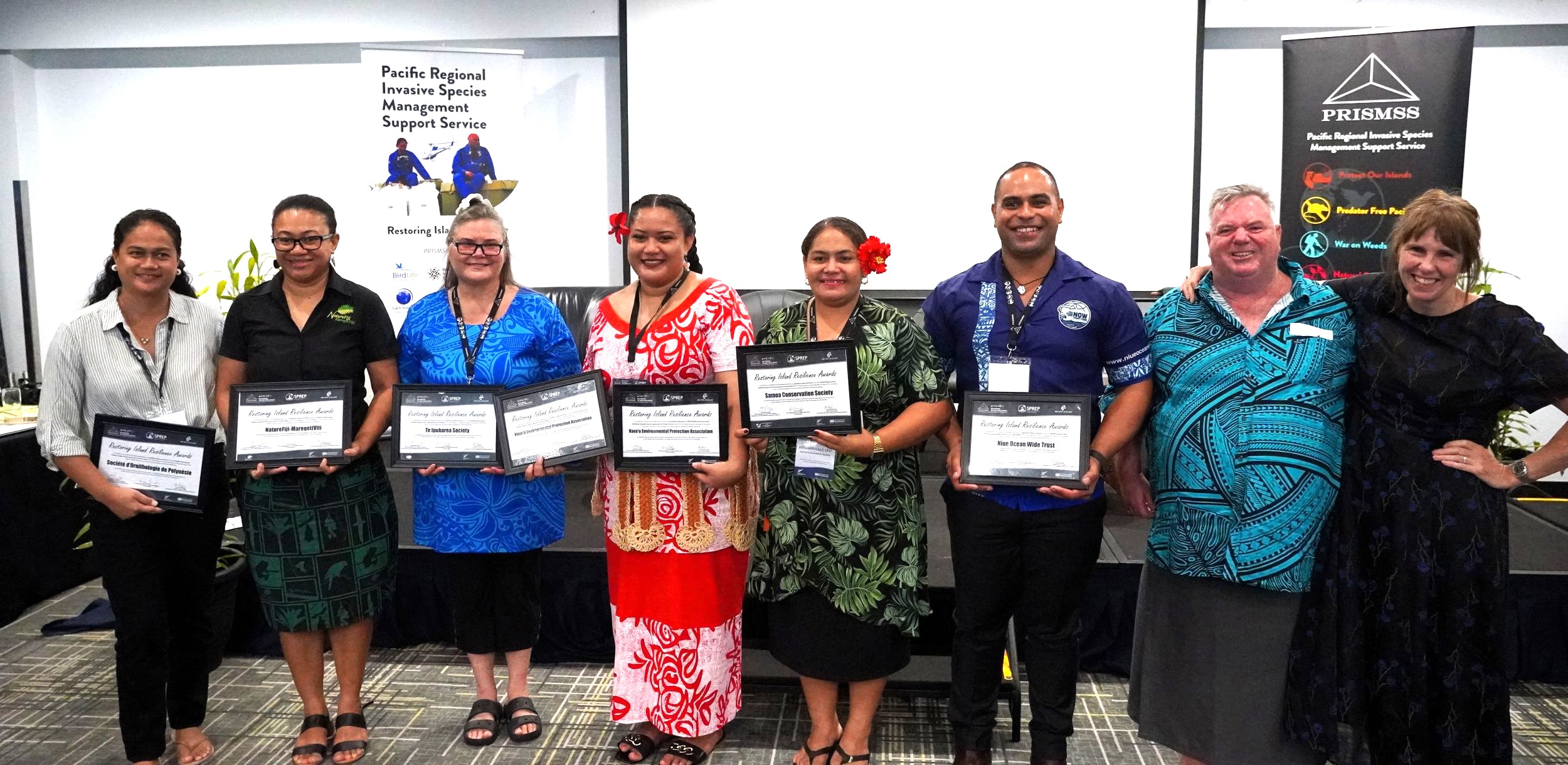
The Vava’u Environmental Protection Association (VEPA) based in Va’vau, Tonga, was awarded the overall winner and received an additional NZ$15,000 grant to further scale up their invasive species management work.
The awards nominees included frontline organisations from across the Pacific from NatureFiji-MareqetiViti, Niue Ocean Wide Trust, Samoa Conservation Society / Sosaiete Faasao o Samoa, Société d’Ornithologie de Polynésie (SOP Manu-French Polynesia), Te Ipukarea Society (Cook Islands) and the Vava'u Environmental Protection Association (Tonga).
His Excellency, Mr Kanbar Hossein-Bor, British High Commissioner to Fiji, commented that, “across the Pacific, invasive species have been formally identified as a threat to 1,531 native species, making them the leading driver of biodiversity loss on islands in the region.”
“We also know that this work is not simply about biodiversity for its own sake as the science is clear that invasive species are a climate issue. There are knock-on effects as we can control vector-borne diseases, protect food security, ensure freshwater access.”
“Controlling invasives can help coral reefs recover faster, which results in more fish in the sea, which in turn improves people’s livelihoods.”
The British High Commissioner added that people of the Pacific and the community-embedded organisations know this as they are on the frontlines of this battle and it is their traditional knowledge and deep awareness of the landscape and culture that ensures the work, they do is trusted and locally driven.
“We’re not just a donor supporting short-term aid, we are investing in systems and institutions. PRISMSS embodies that approach. And we are glad to have played a part in supporting it and look forward to seeing this work continue.”
“On a warming planet, the profound impacts of invasive species are magnified. So, we must work fast to tackle these underlying threats to safeguard this region’s ecological and economic future. The work being recognised is central to this mission.”
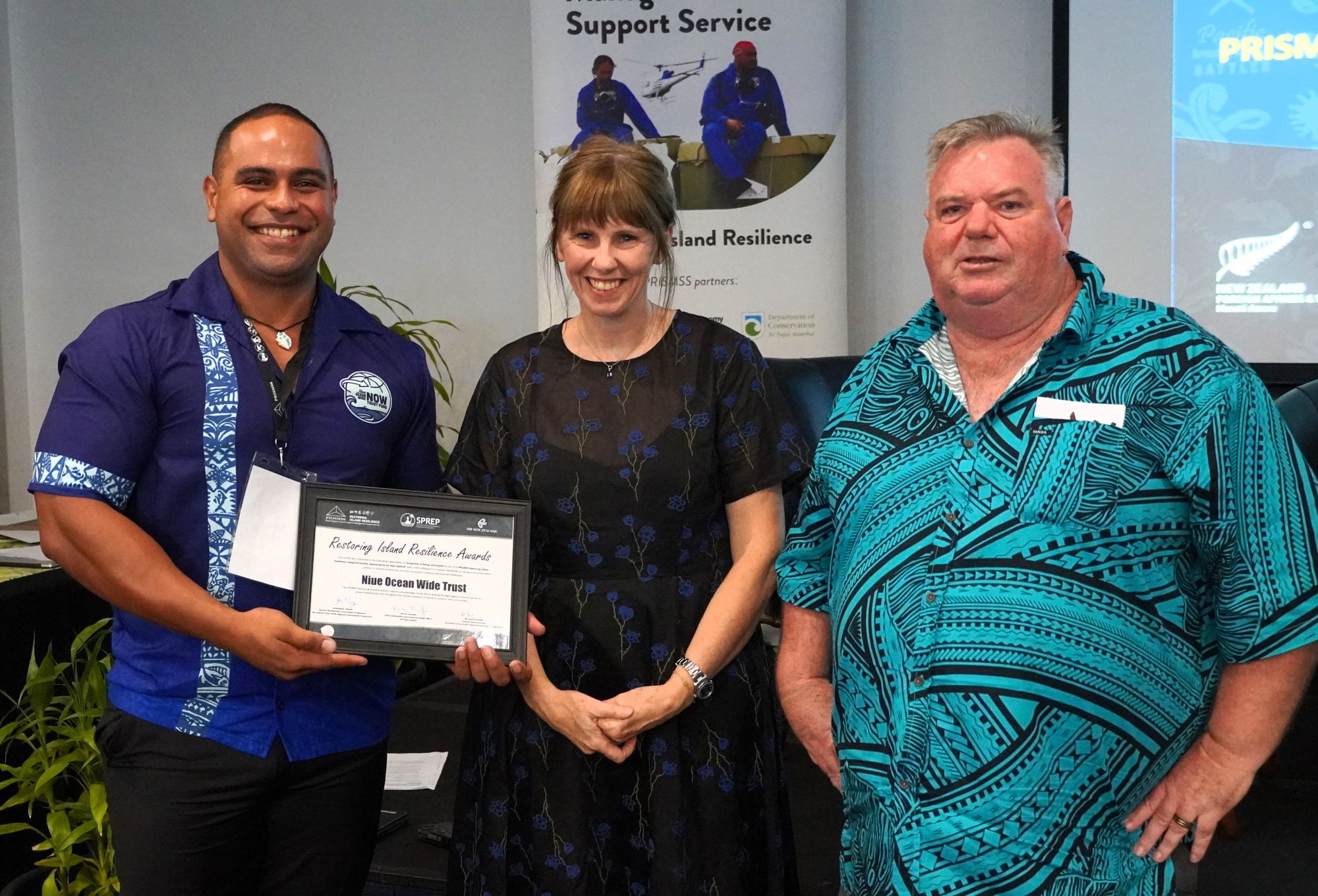
Ms Rachel Bennett, Development Counsellor form the New Zealand High Commission in Fiji shared that, “the six organisations nominated are tackling some of the biggest challenges facing the Pacific, climate change, the impacts of invasive species and ecosystem degradation.”
“For many communities, ecosystems form the frontline defences against the impacts of climate change and disasters. These organisations’ dedication, persistence, and deep community roots are essential to safeguarding the environments and ecosystems that sustain us all.”
“These awards recognise far more than individual projects. They honour collaboration, cultural leadership, and the deep local knowledge which enables Pacific peoples to care for their lands, their waters, and their futures. For New Zealand, it is an honour to stand alongside you as partners in this work.”
Speaking after the win, Ms Talita Morley from VEPA said “the impact is already being felt on the ground, particularly in food production and we’re planning to expand to reach out to other island groups in Tonga, not only our island groups, but the main islands.”
“We’ve already expanded to Ha’apai, because our agriculture has been harmed by these invasive plants, so we need to get rid of it,” she said.
Ms Morley added that the award funding will allow the organisation to scale up its response, bringing support and awareness to more vulnerable communities and used the platform to send a strong message of inclusion and empowerment, particularly for women and young people.
“As a woman, if I can do it, they can do it. This work is not only for men, we as teenagers and youths can stand up for our communities and culture and fight to protect our environment and our endemic species,” she said.
Guests at the PRISMSS RIR Awards event learnt how locally driven action can drive global impact with VEPA’s Ambassador programme, built on the simple but powerful idea of employing community members to manage invasive rats on Mt Talau, has already transformed the ecological balance of Vava’u.
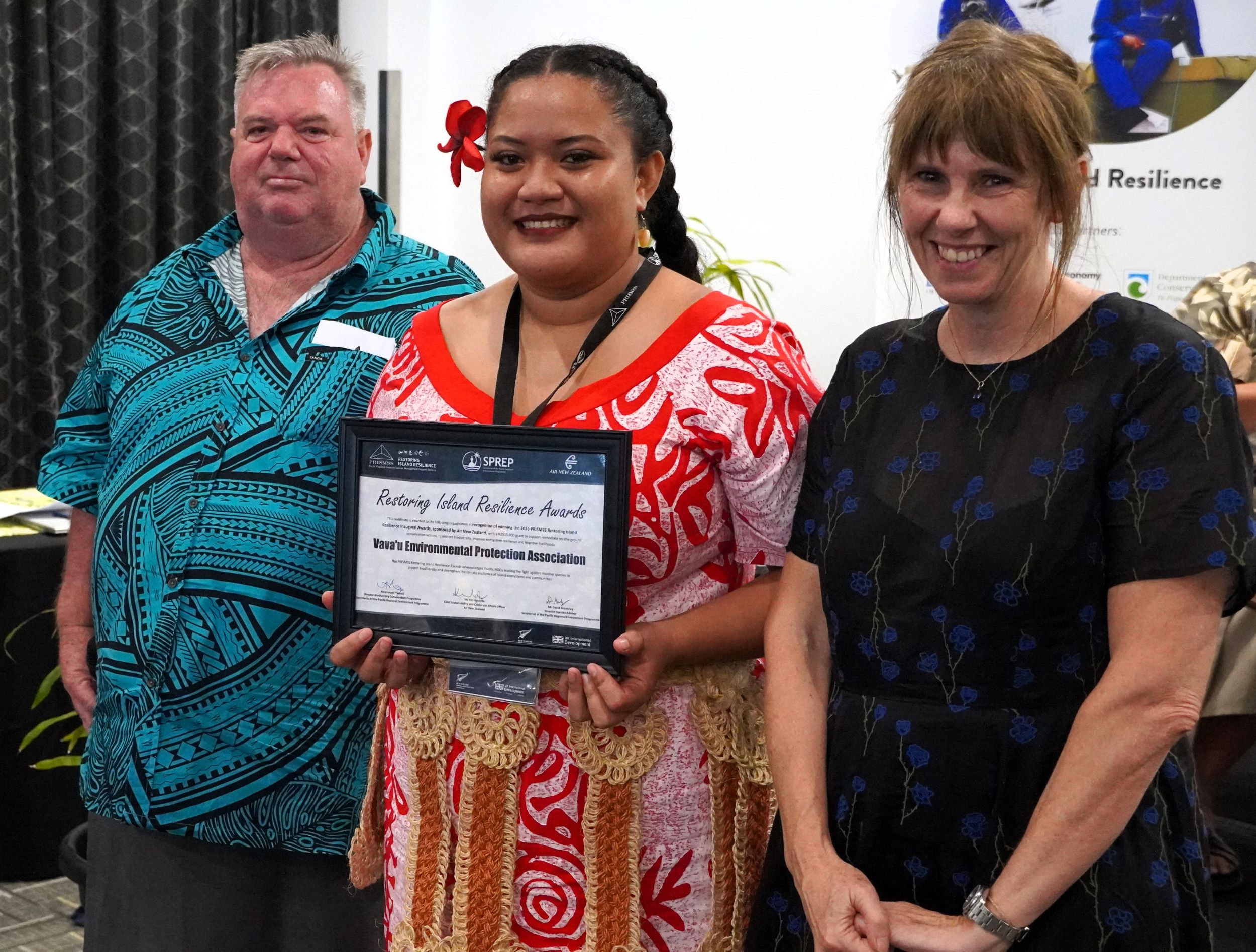
By reducing rat populations, Ambassadors have given the endangered Tongan Whistler a chance to thrive again, while seabird populations are rebounding, restoring nutrient flows that nourish forests and coral reefs. These healthier ecosystems, in turn, act as natural shields against cyclones and strengthen food security, showing how biodiversity protection is inseparable from community resilience.
VEPA’s approach is deeply collaborative. Working hand in hand with Tonga’s Environment Department, Ambassadors maintain the pig-proof fence that safeguards rare endemic plants, while PRISMSS has provided training that blends traditional knowledge with scientific expertise. This partnership produced a species manual for Mt Talau, now used across Tonga, and has empowered communities to take ownership of conservation.
The programme is expanding beyond Vava’u to Ha’apai, with Ambassadors conducting surveys, biosecurity activities, and awareness campaigns, ensuring that invasive species management becomes a cornerstone of climate resilience across the islands.
The initiative is not only ecological but also social. Thirteen Ambassadors are employed, gaining income, skills, and pride as environmental stewards. Their work has sparked new ecotourism opportunities, with visitors eager to join guided bird tours and witness the recovery of species once thought to be disappearing.
The prize funding will go directly into tools like acoustic recorders to monitor bird populations and materials to maintain the Mt Talau fence, ensuring that conservation remains practical and effective.
SPREP Invasive Species Adviser, Mr David Moverley reflected that, “we are deeply grateful to Air New Zealand for their commitment to conservation and for demonstrating how corporate social responsibility can be a powerful force for positive change.”
“Building effective partnerships to protect biodiversity and restore our island ecosystems is at the very core of SPREP’s work as the key environmental organisation for the Pacific region.”
“Their sponsorship of the PRISMSS Restoring Island Resilience Awards demonstrates partnerships can translate into tangible, on-the-ground impact, supporting NGOs who are working tirelessly in some of Air New Zealand’s key destinations to protect biodiversity and strengthen community resilience.”
“These awards remind us that conservation is not an abstract goal. It is about seabirds returning to predator-free islands, reefs becoming more productive, and communities reclaiming their heritage.”
The SPREP Invasive Species Adviser reflected that, “it is about the voices of our communities’, women, youth, elders and people with disabilities being heard, respected, and amplified. It is about ensuring that the benefits of conservation are shared equitably, and that every community has the opportunity to thrive.”
“VEPA’s recognition at the PRISMSS RIR Awards is more than a celebration of one project, it is a testament to the power of community-driven conservation. And by weaving together livelihoods, traditional knowledge, scientific training and ecological restoration, VEPA is showing that resilience is not just about surviving challenges, but about building a future where biodiversity and people thrive together.”
The PRISMSS Restoring Island Resilience awards event not only recognised outstanding conservation achievements but also showcased how locally driven action, rooted in traditional knowledge and community leadership, can deliver global impact by weaving together biodiversity protection, climate resilience, and sustainable livelihoods with an exhibition display.
Since 2019, PRISMSS supported programmes have helped expand predator control and invasive species management across dozens of island landscapes. More than 100 Pacific islands have now been declared predator free, delivering measurable benefits for biodiversity and ecosystem resilience, including healthier and more productive coral reefs.
The PRISMSS partnership enables Pacific Island governments and NGO partners to access global expertise and support for invasive species management from organisations such as the Bioeconomy Science Institute (NZ), BirdLife International, Earth Sciences New Zealand, New Zealand Department of Conservation, Island Conservation, the Pacific Community and SPREP.
About PRISMSS: The Pacific Regional Invasive Species Management Support Service (PRISMSS) is a service designed to facilitate the scaling up of operational management of invasive species in the Pacific. The SPREP Centrre of Excellence, PRISMSS brings together experts to provide support within the Pacific region with a focus on protection of indigenous biodiversity and ecosystem function. As a service provider, PRISMSS provides a comprehensive suite of support services in a cohesive, effective, efficient, and accessible manner to Pacific Island countries and territories.
Restoring Island Resilience (RIR): The PRISMSS - Restoring Island Resilience (RIR) is a New Zealand-PRISMSS collaboration project that aims to improve Pacific Island Countries and territories livelihoods and resilience to climate change by reducing the impact of invasive species on natural and agricultural ecosystems through the six PRISMSS programmes.
PRISMSS Powered by: New Zealand Foreign Affairs & Trade, United Kingdom International Development, GEF, United Nations Environment Programme & SPREP.
PRISMSS Partners: Bioeconomy Science Institute NZ, Birdlife International, Earth Sciences New Zealand, New Zealand Department of Conservation, Island Conservation, the Pacific Community and SPREP.
PRISMSS Programmes: Protect Our Islands (POI), Predator Free Pacific (PFP), War on Weeds (WOW), Natural Enemies Natural Solutions (NENS), Resilient Ecosystems Resilient Communities (RERC) and Protect Our Marine Areas (POMA).
For additional information please contact Mr Dominic Sadler, PRISMSS Manager on dominics@sprep.org or Mr Nitish Narayan, PRISMSS Communications & Liaison Officer on nitishn@sprep.org