

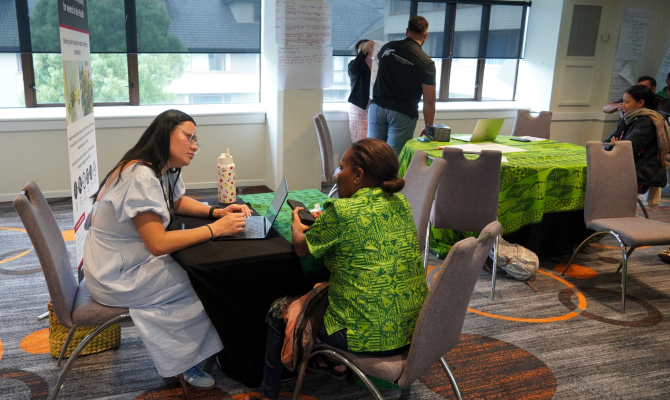
Pacific island nations face unique vulnerabilities to invasive species, which threaten biodiversity, food security, and climate resilience. By participating in the XVII International Symposium on Biological Control of Weeds (ISBCW), organised by the New Zealand Bioeconomy Science Institute, held in Rotorua, Pacific representatives were able to exchange experiences, learn from international experts and explore new technologies such as bioherbicides, remote sensing and drone applications.
The attendance of 20 Pacific island participants was made possible largely through the support of the Secretariat of the Pacific Regional Environment Programme (SPREP) led Pacific Regional Invasive Species Management Support Service (PRISMSS) with funding provided by the New Zealand Ministry of Foreign Affairs and Trade and the United Kingdom International Development.
By coordinating funding and technical assistance, PRISMSS enabled most Pacific island delegates to attend the ISBCW, ensuring their voices were heard in a space where global strategies are shaped. The New Zealand Bioeconomy Science Institute is the lead technical partner of the PRISMSS Natural Enemies-Natural Solutions programme.
PRISMSS Manager, Mr Dominic Sadler while reflecting on the symposium shared that, “the presence of Pacific islanders at ISBCW underscored the importance of inclusion and showcased how biocontrol is not just about managing weeds, it is about protecting livelihoods, ecosystems, and resilience.”
“Enabling Pacific islanders to participate in international forums like the ISBCW assists participants to learn from global experts, share lessons from their own contexts, and build networks that strengthen regional collaboration.”
“Their contributions reminded the global community that small islands are on the frontlines of invasive species impacts, but also that they are leaders in innovative, community-driven solutions.”
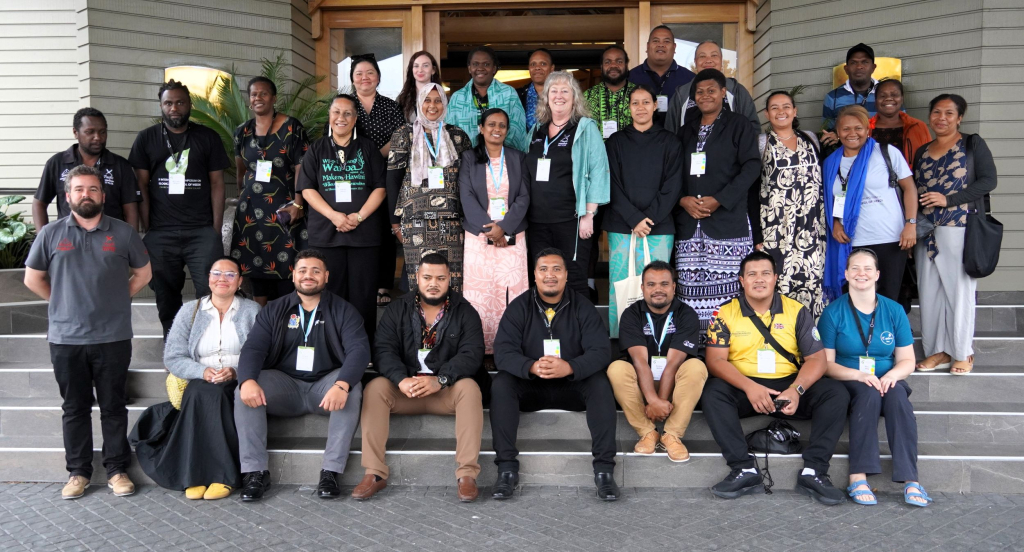
Pacific representatives highlighted the importance of attending the ISBCW, value of shared learning and emphasised how exposure to global expertise can help in reassuring communities that biocontrol is safe, effective, and adaptable to local contexts.
Ms Moon Chan an Environmental Scientist with the Scientific Research Organisation of Samoa shared that, “as a Pacific islander, I am inspired by the impressive global approaches in biocontrol, and the depth of knowledge is encouraging to see.”
“It emphasises the power of collaboration on an international level. I will take the knowledge I learned about host specificity and applying it to African tulip beetle in refining design studies.”
Mr Alowesi Suveinakama from the Cook Islands National Environment Service shared, “up until now I was only exposed to the tip of the iceberg when it came to biocontrol.”
“It’s a big topic but I’ve learnt about where we might have gaps and opportunities to collaborate with each other such as sharing data. We have heard about the lessons from other countries, and we can learn from those lessons for a better future for our Pacific.”
Mr Veira Pulekera, Principal Conservation Officer, Solomon Islands Environment and Conservation Division commented that, “being at this conference exposed me to other options to manage invasive weeds that I can now take back to my community.”
“Hearing from international experts, even from Pacific neighbours who are also becoming experts, we got to hear their lessons learned. In the Solomon Islands, we are preparing ourselves for when we are ready to carry out this work and build on the experience and knowledge of others.”
Ms Makereta Ranadi from the Fiji Ministry of Agriculture reflected, “this symposium gave us the chance to connect with our Pacific neighbours as our environments are so alike, and we face many of the same challenges, so our conversations have focused on how we can support each other to strengthen biocontrol practices.”
“Listening to researchers from across the region and learning about technologies like bioherbicides and remote sensing surveys has inspired me to think about how we can apply that knowledge and expertise back home in Fiji.”
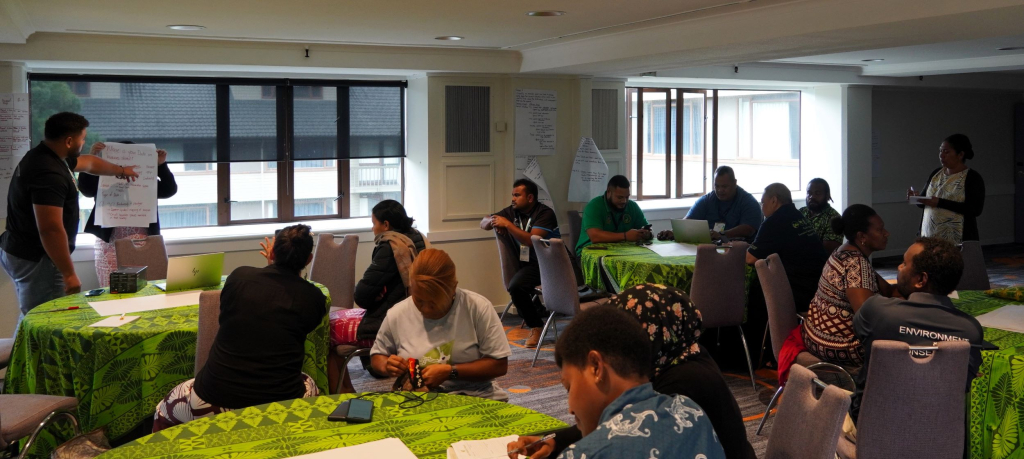
Ms Mimosa Bethel, Biosafety and Invasives Species Officer with the Vanuatu Department of Environmental Protection and Conservation shared that, “this is my first time at an international biocontrol conference, it was a great opportunity to meet fellow scientists who share my expertise, talk to them and creating that network.”
“I’m looking forward to expanding my work after the experience of this conference, particularly with Import Risk Assessment. There is potential for more Pacific research in the islands,” she added.
PRISMSS through programme such as Natural Enemies – Natural Solutions, helps Pacific countries scale up biocontrol efforts. It provides technical training, fosters regional coordination, and integrates traditional knowledge with scientific methods to ensure solutions are culturally relevant and community driven.
By introducing new tools PRISMSS equips practitioners with the expertise needed to manage invasive weeds effectively while linking these efforts to broader climate resilience strategies.
About PRISMSS: The Pacific Regional Invasive Species Management Support Service (PRISMSS) is a service designed to facilitate the scaling up of operational management of invasive species in the Pacific. The SPREP Centre of Excellence, PRISMSS brings together experts to provide support within the Pacific region with a focus on protection of indigenous biodiversity and ecosystem function. As a service provider, PRISMSS provides a comprehensive suite of support services in a cohesive, effective, efficient, and accessible manner to Pacific Island countries and territories.
Restoring Island Resilience (RIR): The PRISMSS - Restoring Island Resilience (RIR) is a New Zealand-PRISMSS collaboration project that aims to improve Pacific Island Countries and territories livelihoods and resilience to climate change by reducing the impact of invasive species on natural and agricultural ecosystems through the six PRISMSS programmes.
PRISMSS Powered by: New Zealand Foreign Affairs & Trade, United Kingdom International Development, GEF, United Nations Environment Programme and SPREP.
PRISMSS Partners: Bioeconomy Science Institute, Birdlife International, Earth Sciences New Zealand, New Zealand Department of Conservation, Island Conservation, the Pacific Community and SPREP.
PRISMSS Programmes: Protect Our Islands (POI), Predator Free Pacific (PFP), War on Weeds (WOW), Natural Enemies Natural Solutions (NENS), Resilient Ecosystems Resilient Communities (RERC) and Protect Our Marine Areas (POMA).
For additional information please contact Mr Dominic Sadler, PRISMSS Manager on dominics@sprep.org or Mr Nitish Narayan, PRISMSS Communications & Liaison Officer on nitishn@sprep.org