

The Global Environment Facility (GEF) Regional Invasives Project (RIP) marked a turning point for Pacific island nations in their fight against invasive species. Through the GEF-6 RIP, countries were able to establish national frameworks, carry out eradication campaigns and strengthen community resilience. Tuvalu’s rat eradication efforts, for example, allowed seabird populations to rebound, restoring nutrient flows that sustain coral reefs and forests.
These outcomes demonstrated that invasive species management protects biodiversity, and also directly supports food security, ecosystem services, and climate adaptation. Building on this success, a proposed GEF 8 project aims to embed invasive species management more deeply into climate resilience strategies across the Pacific.
Coordinated through the Secretariat of the Pacific Regional Environment Programme (SPREP), the GEF 8 project will broaden training, monitoring, and biosecurity efforts while weaving traditional knowledge together with scientific methods. Designed to be both adaptive and scalable, it creates a foundation for future initiatives and aligns with larger financing mechanisms. This approach ensures wider reach, long-term sustainability, and lasting impact for communities and ecosystems across the Pacific.
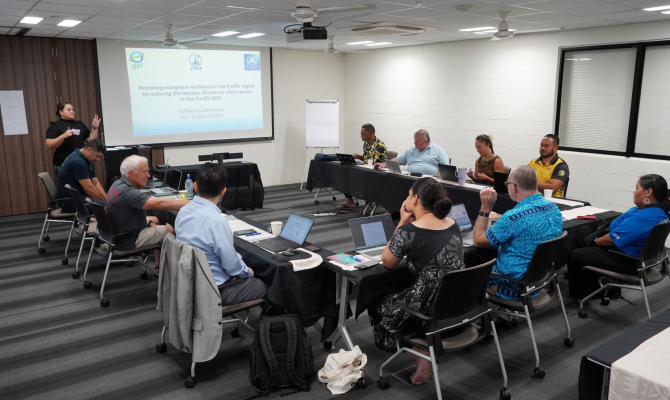
Pacific Island countries and regional partners came together in March for a validation workshop of the GEF-8 project cycle “Building national institutional capacity and capability to protect and restore biodiversity and increase resilience to climate change by managing invasive species.” The workshop marked a critical step in finalising the project design and ensured that it reflects national priorities, regional strategies and community needs.
Invasive species remain one of the most serious threats to Pacific ecosystems, undermining food security, livelihoods, and cultural heritage. The validation workshop provided an opportunity for country representatives to review the proposed activities, share feedback and endorse the project framework.
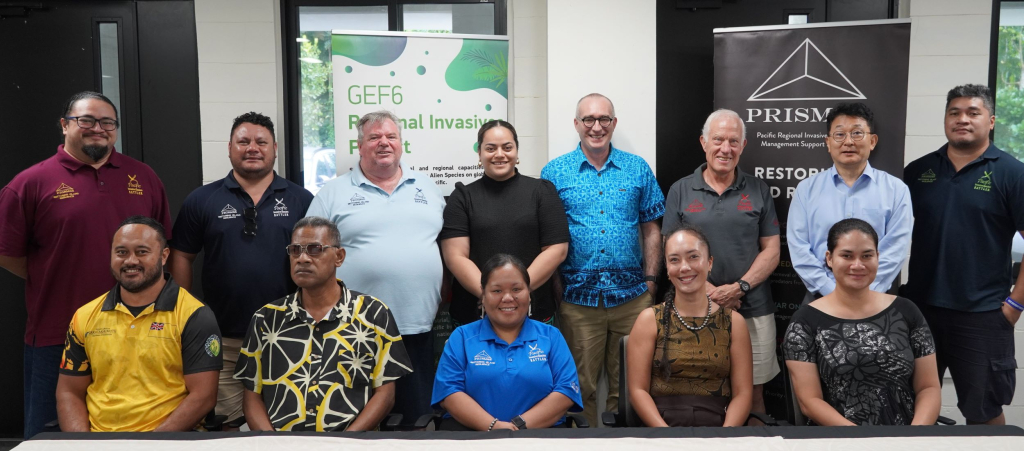
Representatives from the Cook Islands, Marshall Islands Niue, Tonga, and Tuvalu convened to review and endorse the detailed work plan, confirm partner roles and responsibilities and provide coordinated input to finalise the CEO Endorsement Request (ER) package and all supporting annexes, ensuring country alignment and submission readiness.
This process ensured that the initiative is practical, inclusive, and culturally grounded, while embedding Gender Equality, Disability, and Social Inclusion (GEDSI) and Traditional Knowledge (TK) into its design.
The GEF-8 CEO ER is the formal stage in the GEF project cycle where the project proposal, after being developed and validated with stakeholders, is submitted to the GEF Secretariat for final approval by the GEF CEO.
The workshop highlighted the importance of partnerships in biodiversity conservation. With UNEP as the implementing agency and SPREP as the executing agency, the project builds on the success of earlier GEF investments and the establishment of the SPREP Center of Excellence, the Pacific Regional Invasive Species Management Support Service (PRISMSS).
By strengthening national institutions and expanding regional cooperation, the project will empower communities to scale up invasive species management and restore ecosystems that are vital for resilience to climate change.
SPREP Invasive Species Adviser, Mr David Moverley shared that, “the vision for GEF 8 is clear which is to transform invasive species management into a cornerstone of climate resilience, while creating jobs, and strengthening livelihoods.”
“By scaling up what worked under GEF 6, the Pacific is positioning itself as a global leader in demonstrating how biodiversity protection and climate adaptation can go hand in hand.”
Participants emphasised that the project is not only about protecting biodiversity, but also about safeguarding Pacific identity, culture and livelihoods. The validation workshop reinforced the role of public–private partnerships and corporate social responsibility in supporting conservation, while setting the stage for stronger collaboration across the region.
Mr Huggard Tongatule, National Invasive Species Coordinator at the Niue Department of Environment shared, “GEF-6 showed Niue the power of partnerships in tackling invasive species, from protecting forests to safeguarding reefs.”
“With GEF-8, we aim to scale up these efforts, strengthen national institutions, and embed invasive species management into our climate resilience strategies. This support is vital for protecting our biodiversity and cultural identity, ensuring Niue’s ecosystems continue to sustain our people."
The Assistant Environment Officer with the Tuvalu Depart of Environment, Ms Tiale Mele Panapa, commented, “Tuvalu’s work under GEF-6, including rat eradication on several islets, restored biodiversity and strengthened resilience.”
“GEF-8 gives us the opportunity to scale up these achievements, ensuring our ecosystems continue to support food security, cultural heritage and climate adaptation. This is essential for Tuvalu as we confront invasive species and climate challenges together."
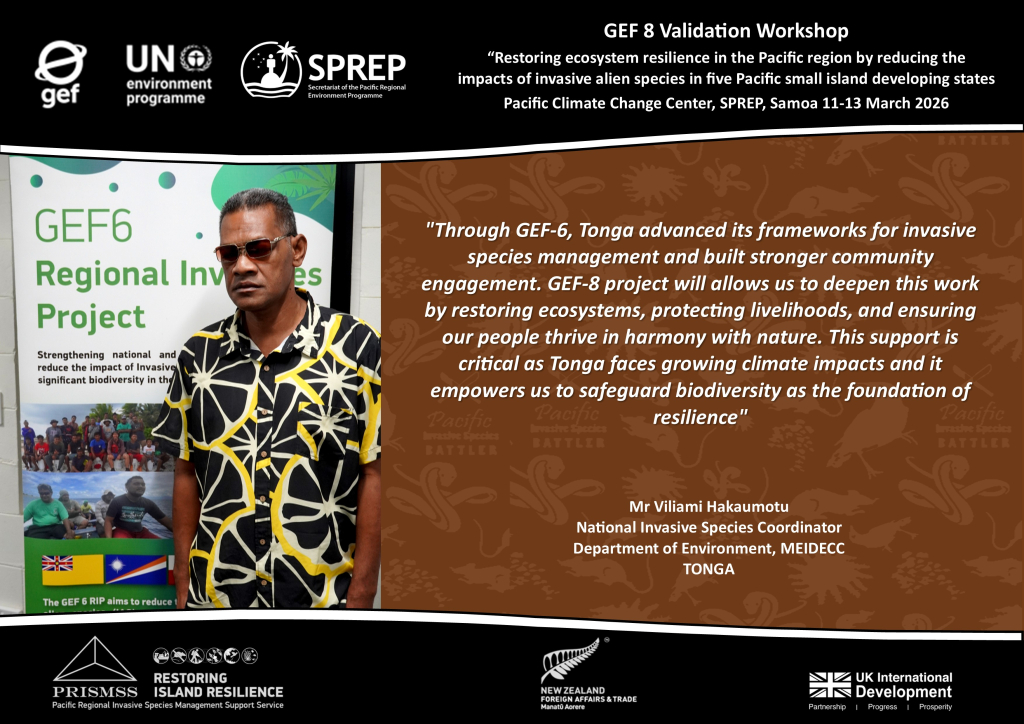
Mr Viliami Hakaumotu, National Invasive Species Coordinator, from the Tonga Ministry of Meteorology, Energy, Information, Disaster Management, Environment, Climate Change and Communications shared, "through GEF-6, Tonga advanced its frameworks for invasive species management and built stronger community engagement.”
“The GEF-8 project will allow us to deepen this work by restoring ecosystems, protecting livelihoods, and ensuring our people thrive in harmony with nature. Tonga faces growing climate impacts, and this project will enable us to safeguard biodiversity as the foundation of resilience."
The GEF7 Project Officer at the Cook Island National Environment Service Ms Terena Koteka-Wiki, reflected, “with the support of the GEF-8 project, Cook Islands will be better positioned than ever to strengthen invasive species management and restore our island habitats.”
“This investment expands our capacity to protect biodiversity, safeguard food security and ensure our communities remain resilient in the face of climate change and empowers us to defend our islands from invasive threats while preserving our natural heritage and biodiversity."
Ms Daffodil Silver Wase, Assistant Chief of Quarantine at the RMI Department of Environment shared, "The Marshall Islands achieved important gains under GEF-6, strengthening biodiversity conservation and community awareness.”
“With GEF-8, we can expand these successes, protect our fragile atolls from invasive species and build resilience for our communities. This support means our people can continue to rely on healthy ecosystems for food, culture and survival in the face of climate change and biodiversity loss."
With the project now validated, the final design will be submitted to the Global Environment Facility for approval. Once endorsed, it will provide Pacific Island countries with the tools, resources, and partnerships needed to restore ecosystems, strengthen resilience and ensure that biodiversity conservation is embedded into sustainable development across the Pacific.
The GEF 8 Project is funded by the Global Environment Facility, implemented by the United Nations Environment Programme, and executed by the Secretariat of the Pacific Regional Environment Programme. The Project will work primarily in the Cook Islands, Marshall Islands Niue, Tonga, and Tuvalu. Implementation of the GEF 8 project is supported by the Pacific Regional Invasive Species Management Support Services (PRISMSS). For more information on the GEF 8 Project please contact the Project Manager, RISP, Ms Isabell Rasch-Mulitalo, at isabellr@sprep.org
About PRISMSS: The Pacific Regional Invasive Species Management Support Service (PRISMSS) is a service designed to facilitate the scaling up of operational management of invasive species in the Pacific. The SPREP Centrre of Excellence, PRISMSS brings together experts to provide support within the Pacific region with a focus on protection of indigenous biodiversity and ecosystem function. As a service provider, PRISMSS provides a comprehensive suite of support services in a cohesive, effective, efficient, and accessible manner to Pacific Island countries and territories.
Restoring Island Resilience (RIR): The PRISMSS - Restoring Island Resilience (RIR) is a New Zealand-PRISMSS collaboration project that aims to improve Pacific Island Countries and territories livelihoods and resilience to climate change by reducing the impact of invasive species on natural and agricultural ecosystems through the six PRISMSS programmes.
PRISMSS Powered by: New Zealand Foreign Affairs and Trade, United Kingdom International Development, GEF, United Nations Environment Programme & SPREP.
PRISMSS Partners: Bioeconomy Science Institute (NZ), Birdlife International, Earth Sciences New Zealand, New Zealand Department of Conservation, Island Conservation, the Pacific Community and SPREP.
PRISMSS Programmes: Protect Our Islands (POI), Predator Free Pacific (PFP), War on Weeds (WOW), Natural Enemies Natural Solutions (NENS), Resilient Ecosystems Resilient Communities (RERC) and Protect Our Marine Areas (POMA).
For additional information please contact Mr Dominic Sadler, PRISMSS Manager on dominics@sprep.org or Mr Nitish Narayan, PRISMSS Communications & Liaison Officer on nitishn@sprep.org