

5 March 2026 - History is being made to protect our wildlife as decisions adopted at the global Endangered Species conference come into effect on 5 March.
The Twentieth Conference of the Parties to the Convention on International Trade in Endangered Species (CITES) was held in Uzbekistan from 24 November to 5 December 2025. It was there that new and updated international trade regulations were adopted for 29 species that are native to the Pacific and Oceania. Following the statutory 90-day period, these are now entered into force.
“We applaud all Parties for putting measures in place so that any international trade of these species is legal, sustainable and traceable,” said Mr Amena Yauvoli, Director of Biodiversity Conservation of the Secretariat of the Pacific Regional Environment Programme (SPREP).
“Our Pacific region is home to some of the most exotic species, we must continue to work together to protect our biodiversity which is at the heart of our Pacific livelihoods, culture and traditions.”
The Golden sandfish (Holothuria lessoni) species of sea cucumber, all species in the gulper shark family (Centrophoridae spp) of which 12 are native to Oceania, one native species of school shark (Galeorhinus galeus), and two geckos that are endemic to Australia, are all now listed in CITES Appendix II.
Any international trade or introduction from the sea, whether through intentional fisheries or unintentional bycatch, now require permits that are issued by national CITES Authorities – conditional on assessments of legal acquisition and non-detrimental - sustainable harvest.

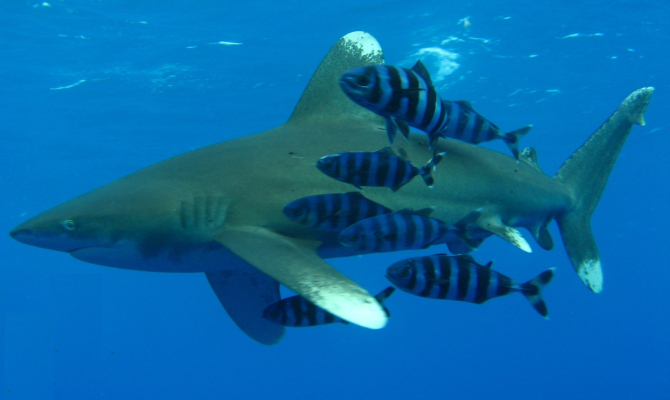
The Oceanic whitetip shark (Carcharhinus longimanus), whale shark (Rhincodon typus), Glaucostegus typus (a native species of Guitarfish), three native species in the family of wedgefish (Rhinidae spp.), and all seven ray species in the family Mobulidae spp. native to Oceania, have all been listed with legal provisions that prohibit any future commercial international trade in these.
“These new or updated trade regulations legally enter into force as of today, even though some of them were adopted by the Conference with implementation delays of up to 24 months,” said Mr Yavouli.
“This will allow governments sufficient time to prepare their implementation. These listings are remarkable, as they will effectively remove these species, some of which used to be commercially traded, from legal international trade.”
These new or updated trade regulations complement those that were already in force before CoP20 – in total international trade in 2757 native plant species and 1888 animal species native to Oceania is now subject to the CITES regulations.
As the CITES Convention requires all Parties to collaborate in the regulation of all international trade across their borders that involves any CITES-listed species, Oceania governments additionally need to also assist with the implementation of trade controls for CITES-listed species that are native to other regions but are traded within Oceania.
Other decisions by the CITES Conference of the Parties are also of relevance to the region. In particular, the CITES CoP adopted suites of decisions that provide directions related to the scientific basis, legal documentation, and administrative implementation of existing CITES listings, which will guide future regional work on electronic trade permitting procedures, species monitoring and reporting, enforcement actions, and many other aspects related to international trade and the environment.
“SPREP is looking forward to work with governments and stakeholders to support the region in following up on these important policies, and to address their implications for species conservation, international trade, and local livelihoods,” said Mr Yavouli.
Oceania Parties to the CITES COP are Australia, Fiji, New Zealand, Palau, Papua New Guinea, Samoa, Solomon Islands, Tonga, Vanuatu all of whom along with the Cook Islands as an observer attended CITES COP20 in Uzbekistan in 2025.