

3 March 2026, Apia, Samoa - Across the Pacific, invasive species are driving significant biodiversity loss, affecting the ecosystems which support community resilience. Pacific NGOs stand on the frontline of the battle against invasive species. From remote islands in Tonga and Niue, to the dense forests of Fiji and Samoa, to seabird sanctuaries in French Polynesia, these community‑embedded organisations carry out the essential, day‑to‑day work that keeps invasive rats, feral cats, wild pigs and invasive weeds in check.
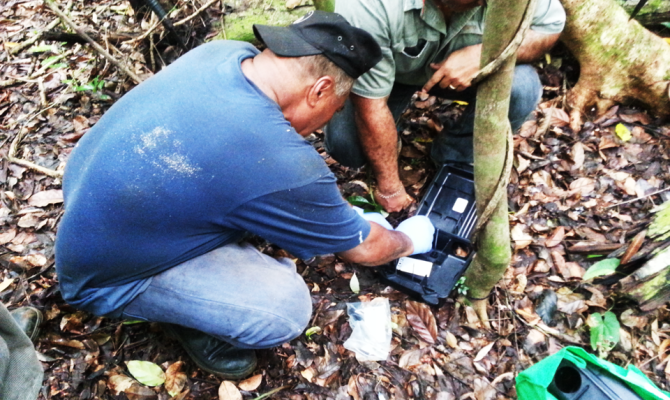
They monitor endangered birds, maintain predator traps, train local rangers, lead biosecurity patrols in remote and dispersed island environments, and work directly with communities to protect crops, reefs and forests.
Their deep cultural connections, traditional knowledge and long-term presence in communities make them uniquely effective at tackling invasive species in ways that are trusted, inclusive and locally driven. However, the scale of the threat far exceeds what any single NGO, or country can manage alone.
The Pacific Regional Invasive Species Management Support Service (PRISMSS) enables these NGOs to access global expertise, innovative tools, training, and financial resources. PRISMSS, led by the Secretariat of the Pacific Regional Environment Programme (SPREP), supports expanded predator control, restores island ecosystems, and builds resilient livelihoods across the Pacific.
The inaugural PRISMSS Restoring Island Resilience Awards, sponsored by Air New Zealand, is recognising Pacific NGOs leading the fight against invasive species to protect biodiversity and strengthen the climate resilience of island ecosystems and communities. The awards also underscore why continued investment, and expertise has been critical to scaling up this work across the region.
The awards recognise frontline organisations from across the Pacific including nominees from NatureFiji-MareqetiViti, Niue Ocean Wide Trust, Samoa Conservation Society / Sosaiete Faasao o Samoa, Société d’Ornithologie de Polynésie (SOP Manu-French Polynesia), Te Ipukarea Society (Cook Islands) and Vava'u Environmental Protection Association (Tonga).
As part of Air New Zealand’s sponsorship, all six nominated NGOs will each receive NZ$5,000 grants to support immediate on-the-ground conservation actions, to protect biodiversity, increase ecosystem resilience, and improve livelihoods. The overall winner will receive an additional NZ$15,000 grant to further scale up their invasive species management work. The winning NGO will demonstrate.
The awards will be presented on 18 March 2026 at the Holiday Inn, Suva, Fiji. The event will be held as part of the upcoming PRISMSS Empowering Pacific Narratives – GEDSI & Traditional Knowledge in Invasive Species Communications Capacity Building Symposium.

Ms Kiri Hannifin, Chief Sustainability and Corporate Affairs Officer at Air New Zealand, says the airline is proud to support the extraordinary work Pacific NGOs and community leaders are doing to restore and protect their ecosystems.
"Invasive species pose a serious threat to biodiversity, livelihoods and long-term climate resilience across the Pacific, so it’s inspiring to see practical, locally led solutions driving real impact."
"Through our Climate & Nature Fund, we’re delighted to be the principal sponsor of the Awards, contributing NZD $50,000 in prize funding and event support."
"At Air New Zealand, our purpose is to connect New Zealanders with each other and with the world and that includes our Pacific neighbours. These connections go well beyond aviation, they’re about supporting thriving communities and resilient environments across the region we’re proud to call home," she said.
Since 2019, PRISMSS supported programmes have helped expand predator control and invasive species management across dozens of island landscapes. More than 100 Pacific islands have now been declared predator free, delivering measurable benefits for biodiversity and ecosystem resilience, including healthier and more productive coral reefs.
Scientific evidence shows that when rats and feral cats are removed, seabird populations can rebound rapidly. Seabird guano transfers marine nutrients onto land and into adjacent reef systems, boosting reef productivity and resilience to cyclones and climate shocks.
The PRISMSS partnership enables Pacific Island governments and NGO partners to access global expertise and support for invasive species management from organisations such as the Bioeconomy Science Institute (NZ), BirdLife International, Earth Sciences New Zealand, New Zealand Department of Conservation, Island Conservation, the Pacific Community and SPREP.

SPREP Invasive Species Adviser, Mr David Moverley, expressed that, “SPREP acknowledges Air New Zealand’s valued sponsorship and the support of NZMFAT and UK FDCO in recognising the vital contribution of Pacific NGOs to invasive species management.”
“Their community‑anchored work, supported by the PRISMSS partnership, underpins regional biodiversity outcomes and strengthens the resilience of Pacific ecosystems and economies.”
The SPREP Invasive Species Adviser added that, “without sustained investment many Pacific nations would lack the technical tools, training and financing required to manage invasive predators across remote and geographically dispersed islands.”
“The PRISMSS partnership combined much of New Zealand’s conservation expertise together with innovative technology developed in New Zealand. For example, many of the nominated NGO’s plan to use their prize funding to purchase New Zealand-designed self-resetting traps, which are suited to remote and labour-constrained island environments.”
The Vava'u Environmental Protection Association (VEPA) has been nominated for establishing a network of 13 paid local “Ambassadors”. VEPA’s Director, Karen Stone, said the nomination reflects the impact of their growing network of Ambassadors.
“Our ambassadors maintain a network of 53 bait and snap stations and this work has now helped to increase sightings of Tongan Whistlers (Hengahenga) on Mt Talau and right across Vava’u.
“With the recovery of bird populations, more tourists from visiting cruise ships are seeking guided bird tours which is providing more employment opportunities for the local Ambassadors.”
“Through direct employment we are helping young Tongans become environmental stewards and, the more Ambassadors we have as a network, the more biodiversity we can save - which benefits everyone,” she said.

Ms Lotomaulalo Levi from the Samoa Conservation Society shared the prize money will strengthen monitoring, training and long-term management capacity. In doing so, Ms Levi said “we can better protect native species, restore ecological balance, and safeguard the cultural and natural heritage of our islands.”
The PRISMSS Restoring Island Resilience Awards demonstrate that Pacific leadership, backed by sustained investment, innovation and genuine partnership, can restore island ecosystems at scale.
Through coordinated regional support, community leadership and cutting-edge tools, the Pacific is moving toward more resilient islands.
About PRISMSS: The Pacific Regional Invasive Species Management Support Service (PRISMSS) is a service designed to facilitate the scaling up of operational management of invasive species in the Pacific. The SPREP Centre of Excellence, PRISMSS brings together experts to provide support within the Pacific region with a focus on protection of indigenous biodiversity and ecosystem function. As a service provider, PRISMSS provides a comprehensive suite of support services in a cohesive, effective, efficient, and accessible manner to Pacific Island countries and territories.
Restoring Island Resilience (RIR): The PRISMSS - Restoring Island Resilience (RIR) is a New Zealand-PRISMSS collaboration project that aims to improve Pacific Island Countries and territories livelihoods and resilience to climate change by reducing the impact of invasive species on natural and agricultural ecosystems through the six PRISMSS programmes.
PRISMSS Powered by: New Zealand Foreign Affairs & Trade, United Kingdom International Development, GEF, United Nations Environment Programme & SPREP.
PRISMSS Partners: Bioeconomy Science Institute, Birdlife International, Earth Sciences New Zealand, New Zealand Department of Conservation, Island Conservation, the Pacific Community and SPREP.
PRISMSS Programmes: Protect Our Islands (POI), Predator Free Pacific (PFP), War on Weeds (WOW), Natural Enemies Natural Solutions (NENS), Resilient Ecosystems Resilient Communities (RERC) and Protect Our Marine Areas (POMA).
For additional information please contact Mr Dominic Sadler, PRISMSS Manager on dominics@sprep.org or Mr Nitish Narayan, PRISMSS Communications & Liaison Officer on nitishn@sprep.org